AquaCubby articles
What Does pH Mean for Your Fish's Health?
Learn what pH means for fish health, what levels are safe or harmful, and how to fix pH problems in your aquarium before they hurt your fish.
Key Takeaways
- Most freshwater fish thrive between pH 6.5 and 7.5; outside this range, health declines.
- Sudden pH swings are more dangerous than a stable reading slightly outside the ideal range.
- Baking soda raises pH; driftwood, peat, and CO2 lower it—choose based on your fish species.
What Does pH Mean for Your Fish's Health?
pH measures how acidic or alkaline your aquarium water is, on a scale from 0 to 14. A reading of 7.0 is neutral. Below 7 is acidic; above 7 is alkaline (basic). For fish, pH directly affects how their cells absorb oxygen, how their kidneys function, and whether harmful compounds like ammonia become toxic. Getting it wrong—even briefly—can stress or kill fish that appear otherwise healthy.
Why pH Matters More Than Most Hobbyists Realize
The USGS Water Science School explains that pH is a measure of hydrogen ion concentration in water. The more hydrogen ions present, the more acidic the water. This matters to fish because aquatic biology is built around a narrow chemical window.
Here is the mechanism that most basic guides skip: pH affects ammonia toxicity directly. At higher pH (above 8.0), a greater proportion of the ammonia in your tank exists as free ammonia (NH₃) rather than the safer ammonium ion (NH₄⁺). Free ammonia is far more toxic to fish than ammonium. This means a tank with a moderate ammonia reading becomes significantly more dangerous as pH rises—a non-obvious relationship that explains why fish in high-pH water can die even when ammonia test results look "acceptable" in isolation.
On the acidic side, low pH disrupts a fish's ability to regulate ions across its gill membranes, impairing respiration and triggering osmoregulatory stress.
Safe and Harmful pH Ranges for Fish
| Fish Type | Preferred pH Range | Risk Zone |
|---|---|---|
| Most community freshwater fish | 6.5 – 7.5 | Below 6.0 or above 8.5 |
| Cichlids (African Rift Lake) | 7.8 – 8.5 | Below 7.4 |
| Discus / Soft-water species | 5.5 – 6.8 | Above 7.5 |
| Goldfish / Koi | 7.0 – 8.0 | Below 6.5 or above 9.0 |
| Marine / Saltwater fish | 8.1 – 8.4 | Below 7.8 |
What pH Level Can Harm Fish?
For most species, a pH below 6.0 or above 9.0 causes measurable physiological stress. At pH 5.0 and below, fish show impaired reproduction, immune suppression, and eventual organ failure. A few hardy species—like yellow perch—can survive at pH below 4.5, but this is the exception. Most aquarium fish will not recover from prolonged exposure below pH 5.5.
Is 7.4 pH Bad for Fish?
No. A reading of 7.4 is mildly alkaline and is comfortable for the majority of freshwater community fish, including tetras, livebearers, and corydoras. It becomes a concern only for soft-water species like discus or cardinal tetras that naturally live in acidic Amazonian water. Always match pH to the specific species you keep, not to a universal "ideal."
The Hidden Danger: pH Swings, Not Just pH Level
A stable pH of 6.8 is almost always safer than a pH that oscillates between 7.0 and 8.2 over 24 hours. Rapid shifts—called pH crashes—occur most often in tanks with low buffering capacity (low KH), after large water changes with untreated tap water, or following heavy plant die-offs overnight when CO₂ spikes.
Fish exposed to a swing of more than 0.5 units within a few hours show visible distress: rapid gill movement, surface gasping, erratic swimming, and color loss. This is often misdiagnosed as a disease outbreak.
How a Fish Acts Before It Dies from pH Stress
Watch for these warning signs:
- Gasping at the water surface (low oxygen exchange or gill irritation)
- Clamped fins held tight against the body
- Loss of balance or listing to one side
- Sudden color fading or white patches
- Hiding far more than normal, refusing food
These signs can appear within hours of a significant pH shift.
How to Fix pH in a Fish Tank
The right approach depends on which direction pH needs to move and how far.
Raising pH (Making Water More Alkaline)
Baking soda (sodium bicarbonate) is the most widely used method. Add ½ teaspoon per 10 gallons, dissolved in a cup of tank water first, then added slowly. Retest after 24 hours before adding more. Baking soda raises pH and increases KH (carbonate hardness), which improves buffering and helps prevent future crashes.
When not to use it: Avoid baking soda if you keep soft-water species like discus or if your KH is already high, as it will push conditions further from their natural habitat.
Crushed coral and aragonite substrate also raise pH gradually and naturally—better for tanks requiring a sustained high pH, such as African cichlid setups.
Lowering pH (Making Water More Acidic)
- Driftwood and Indian almond leaves release tannins that gently acidify water. This is a natural, slow method appropriate for Amazonian and Southeast Asian biotope tanks.
- Peat moss placed in a filter bag achieves the same result more consistently.
- CO₂ injection lowers pH by forming carbonic acid—common in planted tanks, but requires monitoring because pH will rise again at night when plants stop consuming CO₂.
When not to use chemical pH-down products: Phosphoric-acid-based products work quickly but can cause sudden drops if overdosed. They are harder to control than natural methods and carry more risk for inexperienced hobbyists.
Can Fish Recover from Low pH?
Yes, if the pH is corrected before organ damage sets in. Fish showing early symptoms—lethargy, clamped fins, surface gasping—often recover within hours of stabilization. Fish that have been in damaging pH for several days may have gill damage that is not reversible. The University of Florida IFAS Extension guidance on water quality for aquaculture notes that water quality parameters, including pH, should be managed proactively rather than reactively for this reason.
Gradual correction is essential. Adjusting pH by more than 0.2 units per day risks additional shock. Raise or lower slowly, test frequently, and track your water test trends over time so you can spot patterns before they become emergencies.
What Is the Biggest Cause of Fish Death Related to Water Chemistry?
Ammonia toxicity is the leading water-chemistry killer in aquariums—and as noted above, its danger is amplified at high pH. The second most common cause is rapid pH fluctuation, often from undertreated water changes or a crash in buffering capacity. Testing pH alone without also checking KH (carbonate hardness) gives an incomplete picture; KH is what protects pH stability.
When to Stop DIY Adjustments and Get Expert Help
Most pH problems in home aquariums are manageable with the methods above. Escalate to a specialist aquarium store or an aquatic veterinarian when:
- pH repeatedly crashes despite corrections (points to a deeper substrate or biological issue)
- Multiple fish die without a clear cause and water tests show no obvious problem
- You are managing a commercial aquaculture system where comprehensive water quality monitoring is required
Frequently Asked Questions
Will baking soda raise pH in a fish tank?
Yes. Sodium bicarbonate raises both pH and carbonate hardness. Dissolve it before adding and raise pH no more than 0.2 units per day. It is not suitable for soft-water species or tanks where high KH would be detrimental.
How do I save a fish showing pH distress?
Move the fish immediately to a quarantine tank with stable, species-appropriate water. Do not rapidly correct the main tank while the fish is still in it. Treat the quarantine water with a dechlorinator, verify pH and temperature match, and allow the fish to stabilize before returning it.
The Practical Bottom Line
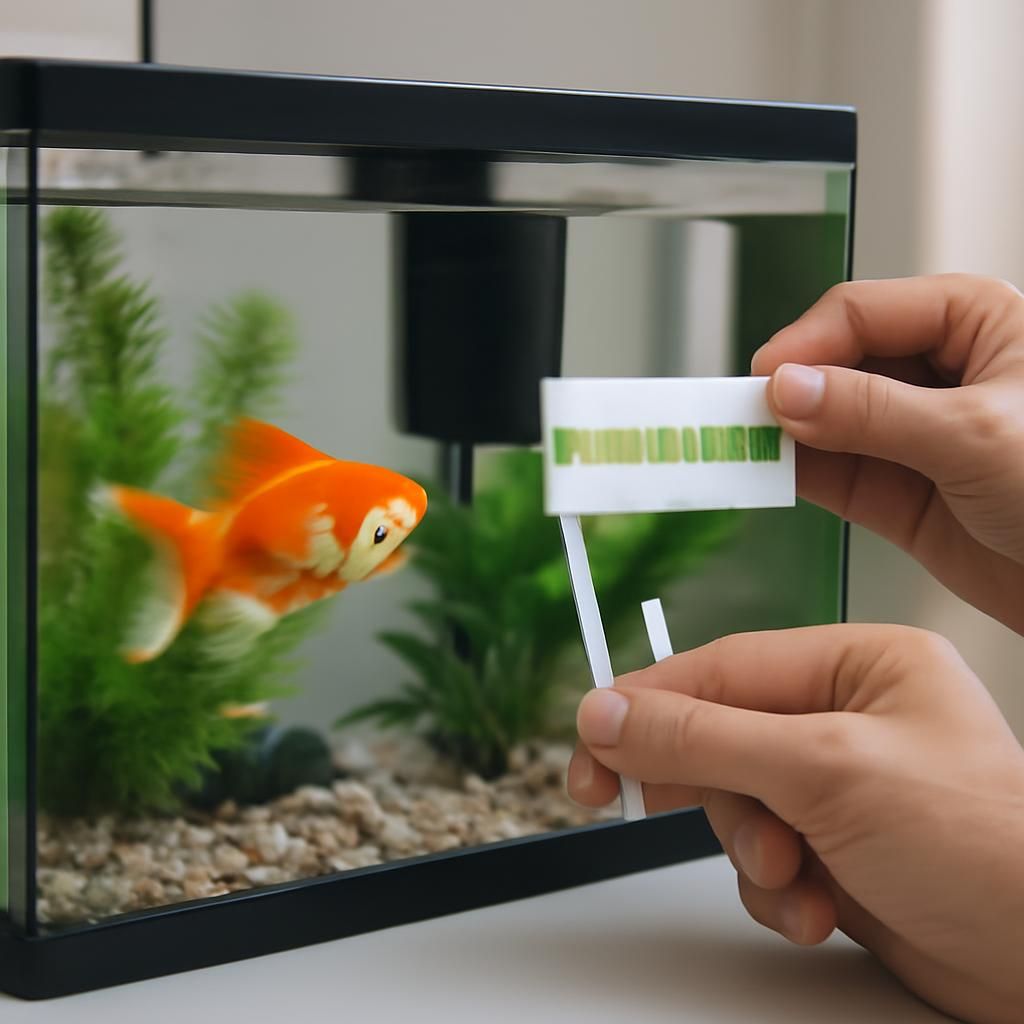
pH is not just a number on a test strip—it governs ammonia toxicity, gill function, and osmoregulation in ways that compound quickly. Test pH and KH together at least once a week in an established tank. When something is off, correct it slowly. The most preventable fish deaths happen not because a keeper ignored pH entirely, but because they corrected it too fast.